
Balatro
PlaystackCard
4.73.52K Reviews
- Version
- 1.8
- Installs
- 1.00M
- Age Rating
- Everyone 10+
Screenshots
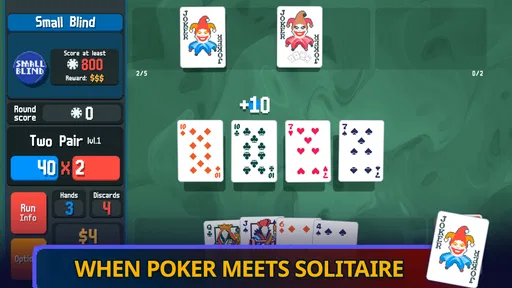
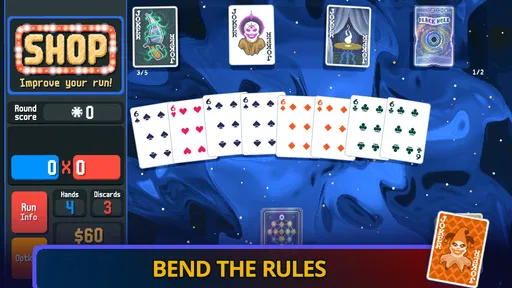
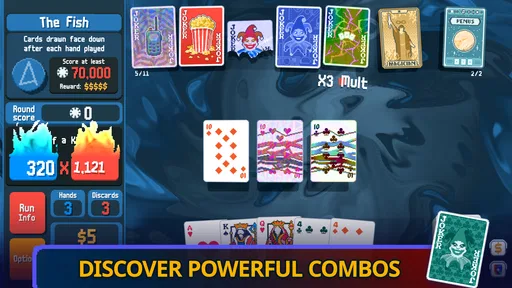
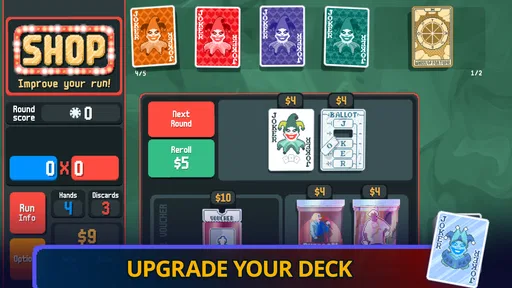
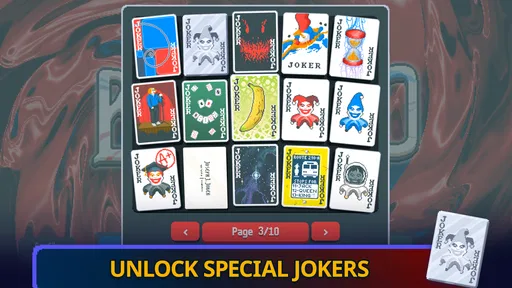
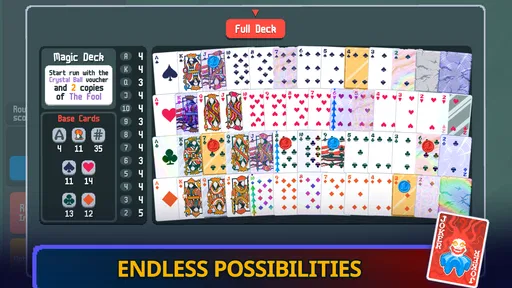
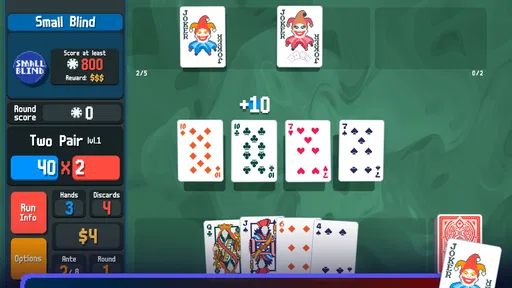
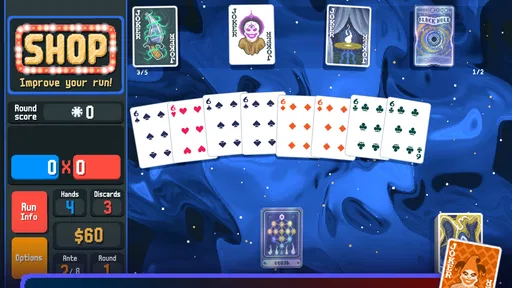
Our Review of Balatro
 Analysis by Appyee
My first few sessions with Balatro were the kind that make a card game hard to put down: I kept spotting one more possible combination and wanting to see whether it would work. The appeal is not simply that it borrows familiar poker hands. It turns those hands into a puzzle about choosing what to keep, what to discard, and how to make a modest play count for more. That learning curve makes the opening feel lively without asking me to master a complicated rulebook first.
Why the first sessions click
Balatro is a paid card game from Playstack, released on September 24, 2024, and listed for $9.99. Its central idea is easy to grasp: poker hands meet solitaire-style decisions, but a run asks you to think beyond making the strongest hand in front of you. I found the enjoyable part was weighing the hand I could play now against the options I might preserve for later. That small tension gives even a quick session a satisfying shape.
The first week is especially welcoming if you already recognize poker hands, though you do not need to be a serious card player to enjoy experimenting. Familiar patterns give you a starting point; the game’s deeper interest comes from noticing how choices accumulate. Rather than treating every hand as an isolated contest, I began to ask which decisions would support the direction of my run. That shift is where the game starts to feel like more than a clever card-themed diversion.
A useful game for the gaps in the day
For me, this suits the everyday moments when I have enough time to focus on a small puzzle but not enough to settle into a long story game. A short break can become a few hands, while a promising run gives me a reason to continue when I have more time. I would not treat that flexibility as a promise that every session will be brief: the desire to try one more approach can easily stretch a planned pause.
That makes it a good fit for people who enjoy replayable decisions and learning from a run that did not go their way. If you prefer a game with a fixed sequence of levels, a strong narrative, or a clear endpoint, this is less likely to become your regular choice. Its pleasure comes from returning to the same basic card language and finding a different way to work with it, not from steadily moving through a conventional campaign.
What keeps the cards interesting
Balatro has a 4.7 average from around 24,000 ratings, and more than a million installs. Those figures suggest a broad audience, but the more useful question for me is whether its central decision-making stays engaging after the novelty of the poker-and-solitaire blend wears off. I think it can, provided you enjoy learning through repeated attempts rather than needing a large stream of new modes or a story to pull you forward.
Month-to-month value comes from better decisions
The recurring value is in gradually improving how you read a situation. Early on, I was mostly pleased to make a recognizable hand. Later, I paid more attention to whether a hand was worth playing as it stood or whether changing it could serve my broader plan. That is a meaningful change in how the game feels: improvement is not just faster reactions, but a more deliberate sense of risk and opportunity.
A practical tip is to avoid judging a choice only by the points it appears to offer immediately. I found it more useful to pause and ask what the choice does for the rest of the run. A seemingly strong hand may not be the most helpful one if it leaves me without a coherent direction; a less impressive play can be worthwhile when it supports the plan I am building. This is the kind of small lesson that makes another attempt feel like practice rather than repetition.
It also compares well with ordinary solitaire when I want more active planning than simply clearing a layout, and with conventional poker games when I want to avoid the social pressure or direct competition of playing against other people. Balatro uses familiar card ideas, but its appeal is in managing a run of decisions. Someone seeking a realistic poker table, opponent psychology, or a social card night should choose a different game. Someone who likes turning limited options into a workable strategy may find this version more compelling than either alternative.
Small habits that help a run
I get more from a session when I make one decision at a time instead of chasing every tempting possibility. Before committing, I look at what I am trying to achieve with the current hand and whether a discard or a conservative play better fits that aim. This sounds simple, but it helps keep experimentation purposeful. When a run ends, remembering the decision that changed its course is more useful than treating the result as luck alone.
It is also worth setting a natural stopping point before starting if you are playing during a break. The game’s repeatable structure makes it easy to tell yourself that one more attempt will be quick, especially after a close result. I found that a planned limit helps preserve the game as a pleasant habit rather than letting it displace whatever I meant to do next. That is a personal trade-off, but it matters for a game whose main attraction is the urge to try again.
Where the routine can wear thin
Balatro’s focus is also its main limitation. Its card decisions are the reason to return, but they can feel repetitive if you want each session to introduce a very different kind of activity. A player who tires of refining strategies within one core loop may reach that point sooner than someone who enjoys replaying a system and gradually understanding it. I would not recommend buying it solely because the theme sounds amusing if you usually prefer fresh environments and a steady sequence of surprises.
The other friction is the learning process. The broad premise is approachable, but making consistently thoughtful choices takes more attention than simply recognizing a good poker hand. If I played while distracted, I was more likely to make a choice because it looked attractive in the moment and only later see why it did not suit the run. It is a better match for a focused few minutes than for someone who wants a game to operate as background noise.
Who should make room for it
I would recommend it to card-game fans who like experimenting, solo players who want replayable runs, and anyone who enjoys the satisfaction of understanding a system through practice. It is also a sensible pick for someone curious about poker hands but not interested in competing at a table. The age rating is Everyone 10+, and the current version is 0.7; the game is listed for devices running Android 6.0 or later.
I would skip it if you want a multiplayer card game, a narrative adventure, or a collection of unrelated mini-games. I would also think twice if you dislike repeated attempts or prefer to know that each play session will deliver a distinct new setting. Balatro’s lasting appeal depends on enjoying its particular loop, not on a broad variety of activities. Since it costs $9.99, I would make the purchase based on whether that style of strategic replay sounds enjoyable, rather than assuming the popular premise alone will carry it.
A long-term verdict
For a game to earn lasting space on my device, I want it to remain satisfying without demanding constant attention or relying on novelty alone. Balatro has a fair case: its decisions give me room to improve, and a failed run can still teach me something I can use next time. Its maintenance burden is low in the everyday sense that the core activity is easy to return to; the real commitment is deciding how much time I want to spend trying again.
Still, recurring value is not the same as universal appeal. If the pleasure of refining a card strategy fades for you, there is no unrelated mode waiting to transform the experience into something else. I see that as an honest trade-off rather than a flaw to hide: the game knows what it wants to be, and people who enjoy that focus are the ones most likely to keep it installed.
My overall recommendation is measured but positive. Balatro earns a place for players who like thoughtful card decisions, short opportunities to play, and the feeling that a later attempt can be smarter than the last. It is less convincing for anyone who needs social play, a story, or constant variety. If you are comfortable with a focused, replayable card game and are willing to learn its rhythm, I think it has a better chance of becoming a regular habit than a novelty you forget after the first week.
First Impressions
From the moment I opened Balatro, I was greeted with a delightfully simple interface. No frills, no fuss—just straight to the point. The app is super intuitive, which means you don’t have to be a tech wizard to start creating. I felt like I’d been using it forever, even though it was my first time. It’s like they took all the best bits of meme culture and wrapped it up in one neat package.
Features That Stand Out
Here’s where the magic happens. Balatro offers a variety of tools that make meme creation feel like a breeze. There’s a rich library of templates ranging from classic memes to new formats. You know those moments when you think, "I wish I could put this into a meme!"? Well, Balatro has you covered.
One of my favorite features is the text customization. You can tweak the font, size, color—it’s like having a mini graphic design suite in your pocket. I spent a good chunk of time just playing around with different styles, and the results were hilarious.
And let’s talk about the sticker and emoji collection. It’s massive! Whether you’re going for sarcastic or just downright silly, you’ll find the perfect sticker to match the vibe. It’s like having an endless box of tools to make your memes pop.
User Experience
The overall user experience with Balatro is seamless. The app doesn’t lag or crash, which is a huge plus. I’ve used other apps where just adding a simple text bubble turns into a nightmare, but not here. Everything runs smoothly, and the app responds quickly to every tap and swipe.
Sharing your creations is just as easy. With a couple of taps, you can post directly to your favorite social media platforms or send it to friends via messaging apps. The integration is so smooth, it’s almost like the app is reading your mind!
Why You’ll Love It
If you’re someone who loves to express yourself through humor, Balatro is your new best friend. It’s not just an app; it’s a community. There’s a whole world of creativity at your fingertips, and the app encourages you to dive right in. Plus, the developers seem pretty keen on updates, so there’s always something new to explore.
It’s also worth noting that the app is pretty light on ads, which is a breath of fresh air in today’s app market. You can focus on creating without being bombarded by pop-ups.
Final Thoughts
In a world where memes are the language of the internet, having an app like Balatro is pure gold. It’s fun, easy to use, and packed with features that make meme creation feel like second nature. Whether you're an avid meme maker or just someone who appreciates a good laugh, Balatro is definitely worth checking out.
So, if you’re ready to unleash your inner comedian and start creating some epic memes, go ahead and give Balatro a whirl. You won’t be disappointed!
Verdict
Strengths of Balatro
- Intuitive user interface, easy to navigate.
- Offers a wide variety of editing tools.
- High-quality output for professional results.
- Regular updates with new features.
- Lightweight app with fast performance.
Limitations of Balatro
- Limited free version with ads.
- Some advanced tools require in-app purchases.
- Occasional crashes on older devices.
- Requires internet for certain features.
- Limited customer support response time.
Similar Picks in This Category
View All
Solitaire - Classic Card Games
MobilityWare4.6

UNO!™
Mattel163 Limited4.3

Spider Solitaire: Card Games
MobilityWare4.6

Solitaire.com - Classic Cards
Tripledot Studios Limited4.7

Plants vs. Zombies™ Heroes
ELECTRONIC ARTS4.1

Hearthstone
Blizzard Entertainment, Inc.4.1
Frequently Asked Questions
What is Balatro and what can I expect from it?
Balatro is an innovative mobile app that combines puzzle-solving with a narrative-driven adventure. Users can expect a unique blend of engaging storylines and challenging puzzles that test their strategic thinking. The app offers a visually appealing interface and intuitive controls, making the user experience both enjoyable and immersive.
Is Balatro free to download and play?
Balatro is free to download on both Android and iOS platforms. While the core gameplay is accessible without any charges, the app offers in-app purchases for additional features, hints, or to unlock premium content. Users can enjoy the game without purchases, but these options enhance the experience for those interested.
What are the system requirements for Balatro?
Balatro requires Android 5.0 and up or iOS 11.0 and later, making it compatible with a wide range of devices. Ensure your device has sufficient storage space and a stable internet connection for the best experience. The app is optimized for both smartphones and tablets, providing flexibility in how you play.
How does Balatro handle user data and privacy?
Balatro prioritizes user privacy by adhering to strict data protection policies. The app collects minimal user data necessary for gameplay and personalizes the user experience. Users can review the privacy policy within the app to understand how their data is handled and can adjust settings to control data sharing preferences.
What kind of support is available if I encounter issues in Balatro?
If users experience any problems with Balatro, they can access the in-app support feature to contact customer service. The app offers a comprehensive FAQ section and troubleshooting guides. For further assistance, users can reach out via email or through social media channels for prompt support and resolution.
Play our best games!


